Why Phonology Matters in Content Design - A Wonky Case Study with Expedia's "OneKey"
content designI just got sent an email from Expedia.
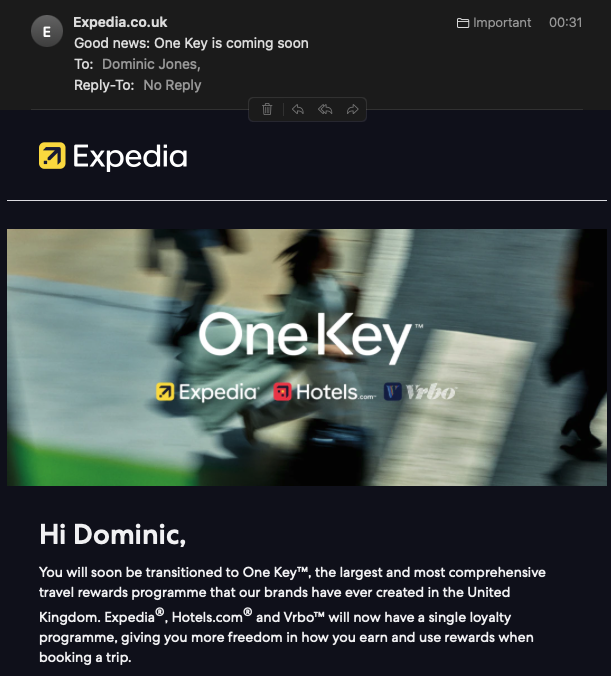
Ever wondered why some product names just don't sit right with you? It might be due to phonology—the study of how words sound. And trust us, it’s more important than you’d think, especially when you’re naming a product. Let's dive into a recent example that shows just how crucial phonology is: Expedia's new "OneKey" rewards system.
The Curious Case of "OneKey" and British Ears Expedia’s "OneKey" is supposed to be a brilliant new way to reward loyal customers. Great, right? Well, hold your horses. For those of us speaking British English, "OneKey" sounds an awful lot like "wonky." And in British slang, "wonky" means wobbly, unstable, or a bit broken—definitely not the vibe you want for a rewards system. Imagine telling your friends, "Hey, I just signed up for this new wonky rewards program!" They might think you’ve lost your marbles.
Why This Matters Phonological missteps can be a real pickle for brands. If your product name sounds like something negative, people might start associating it with that negative meaning. In the case of "OneKey," British users might subconsciously think of the system as unreliable, simply because of how the name sounds. Not exactly the first impression Expedia was aiming for.
How to Avoid a Phonological Faux Pas Know Your Audience: Understand the phonological quirks of your target markets. This means doing your homework on how different groups might hear and interpret your product name.
Phonetic Trials: Before you go all in, test your product name across different accents and dialects. Use focus groups, surveys, or just ask your well-traveled auntie for her opinion.
Cultural Insights: Work with native speakers and cultural gurus. They’ll help you dodge any potential landmines and ensure your product name is smooth sailing in every market.
The Takeaway Expedia’s "OneKey" is a prime example of why phonology in content design is so important. Even if your product is top-notch, its name can trip you up if it carries unintended meanings. By paying attention to phonological details, you can make sure your branding hits the mark and avoids any awkward, wonky misunderstandings.
So, next time you're naming a product, remember: a little phonological foresight can save you a lot of trouble. And keep an ear out—because sometimes, it's not what you say, but how it sounds!
- Previous: Which platform to use?